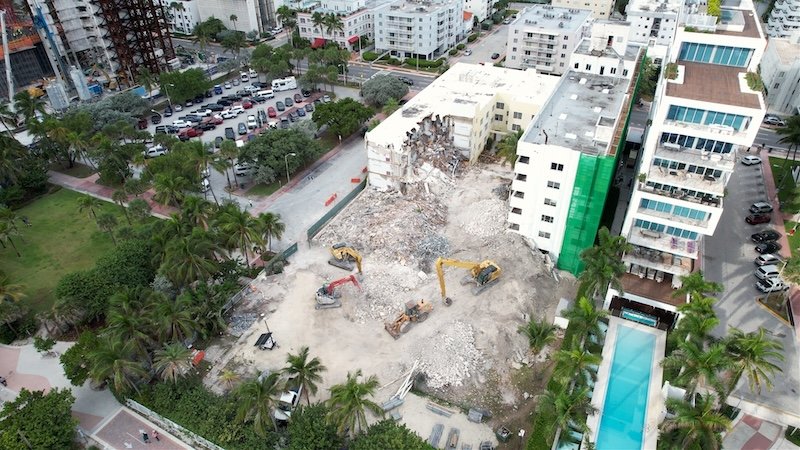
AI-generated image via Google Gemini
City Could Join Coalition to Challenge State's Sweeping Land Use Restrictions
Miami Beach commissioners are set to vote on joining a multi-city lawsuit challenging Senate Bill 180, a controversial state law that critics argue unconstitutionally strips local governments of their ability to regulate land use and zoning for nearly four years.
Background
The resolution before commissioners on December 17th authorizes the city's participation in *City of Destin, et al. v. Kelly*, a lawsuit targeting Senate Bill 180, which Governor Ron DeSantis signed into law on June 26, 2025. Despite being titled "Emergencies," the legislation imposes sweeping restrictions on local land use authority that extend far beyond emergency response.
The law retroactively prohibits local governments from enacting "more restrictive or burdensome" comprehensive plan amendments, land development regulations, or development permit procedures from August 1, 2024, through October 1, 2027 – a span of more than three years. Additionally, any municipality within 100 miles of a future hurricane's track faces a one-year ban on similar regulations, regardless of whether the community was actually impacted by the storm.
City Attorney Ricardo J. Dopico prepared the resolution at the request of Commissioner Kristen Rosen Gonzalez, highlighting the urgency local officials feel about protecting municipal home rule authority.
Key Stakeholders
Supporting the Lawsuit:
Commissioner Laura Dominguez and Commissioner Alex Fernandez are listed as sponsors, with Commissioner Tanya K. Bhatt serving as co-sponsor.
The city is joining a growing alliance of Florida municipalities, including Destin, that view SB 180 as an unprecedented assault on local governance. The resolution specifically urges other Miami-Dade County governments to join the legal challenge.
Opposition:
The Florida Legislature and Governor DeSantis crafted SB 180 as emergency legislation, arguing it's necessary to prevent local regulations from hindering hurricane recovery efforts. However, the law's scope extends far beyond emergency situations, applying statewide restrictions even in areas unaffected by storms.
Legal Representation:
Miami Beach will be represented by Weiss Serota Helfman Cole + Bierman, PL, a firm experienced in municipal law that's coordinating the multi-city challenge.
Financial Impact
The lawsuit represents a relatively modest financial commitment for Miami Beach. The city will pay $10,000 in upfront legal fees, with additional costs only if appeals are filed: $5,000 for a District Court of Appeal case and another $5,000 if the matter reaches the Florida Supreme Court.
This flat-fee structure, shared among multiple municipalities, makes the legal challenge cost-effective compared to individual litigation. The resolution notes no current fiscal impact, as the initial legal fees can likely be absorbed within existing budget allocations.
However, the broader financial implications could be substantial. SB 180 potentially prevents Miami Beach from enacting regulations that protect property values, environmental resources, or community character – regulatory tools that have historically supported the city's tourism-dependent economy.
Community Impact
For Miami Beach residents, SB 180's restrictions could fundamentally alter how their community develops and responds to challenges. The law prevents the city from enacting stronger building standards, environmental protections, or growth management tools that residents might support.
The resolution emphasizes that SB 180's vague language creates "uncertainty" and "chills local governance." This ambiguity could force city officials to avoid reasonable regulations out of fear of triggering expensive litigation, potentially leaving residents with fewer protections for their neighborhoods.
Particularly concerning for a barrier island community like Miami Beach, the law prohibits construction moratoria even when they might be necessary for public safety, infrastructure planning, or environmental protection. The city's ability to respond to sea-level rise, flooding, or other climate-related challenges could be severely constrained.
The retroactive nature of SB 180 is especially problematic, potentially invalidating land use decisions made in good faith over the past year and creating legal uncertainty for property owners and developers alike.
What's Next
The December 17th commission meeting will determine Miami Beach's participation in the lawsuit, which is already pending in Florida's Second Judicial Circuit. If approved, the city clerk will distribute the resolution to all Miami-Dade County municipalities, encouraging broader participation in the legal challenge.
The lawsuit seeks declaratory and injunctive relief, arguing SB 180 violates multiple provisions of the Florida Constitution, including single-subject requirements, unfunded mandate restrictions, and home rule protections. The case will likely face appeals regardless of the trial court outcome, potentially reaching the Florida Supreme Court.
Meanwhile, SB 180's restrictions remain in effect, creating immediate constraints on local land use authority. Miami Beach and other municipalities must navigate these limitations while the legal challenge proceeds, potentially forcing difficult choices between community needs and state compliance.
The resolution's approval would signal Miami Beach's commitment to defending local governance principles that have been cornerstones of Florida municipal authority for decades. The outcome could determine whether Florida communities retain meaningful control over their own development patterns and regulatory priorities.