Proposed Funding Changes would add to Stormwater Infrastructure at Arts Programs' Expense
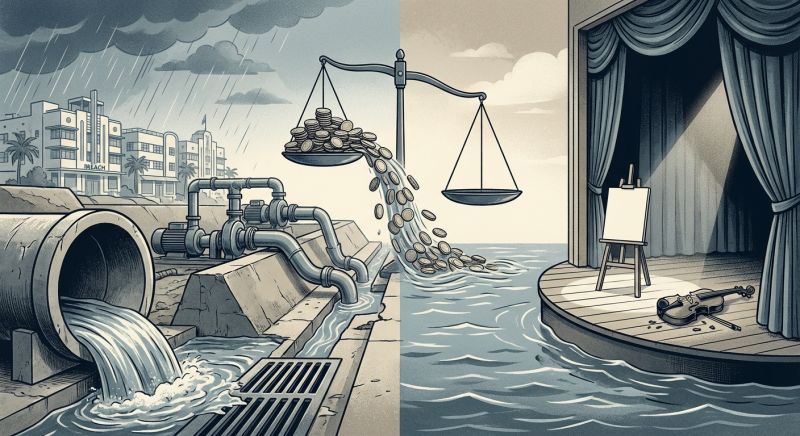
Miami Beach commissioners will consider a significant reallocation of the city's 1% resort tax proceeds that would redirect funds from arts and cultural programs toward flood-fighting infrastructure, marking a potential turning point in how the city balances cultural enrichment against mounting climate challenges.
Background
The proposed resolution, sponsored by Commissioner David Suarez and scheduled for consideration at the December 17th commission meeting, would fundamentally reshape how Miami Beach distributes its resort tax quality of life proceeds beginning in fiscal year 2027.
Under the current allocation structure established through previous resolutions dating back to 2015, the city dedicates 10% of its resort tax quality of life proceeds to various arts and cultural programs. The new proposal would preserve funding only for two specific categories: arts organizations based in Miami Beach (termed "cultural anchors") and youth-focused cultural programming. All remaining arts funding would be redirected toward stormwater infrastructure improvements in tourist areas most vulnerable to king tide and storm flooding.
This represents the third major revision to the resort tax allocation formula since 2015. The original 2015 structure allocated 45% each to transportation initiatives and capital projects across the city's three beach areas, with 10% for arts programs. In 2018, transportation's share increased to 60% while the three beach areas saw their allocations reduced from 15% to 10% each.
Key Stakeholders
The resolution emerges from City Attorney Ricardo J. Dopico's office at Commissioner Suarez's request, though the supporting documents do not reveal specific stakeholder positions or public input that may have influenced the proposal. The commission memorandum notably lacks the typical background analysis or public engagement summary that often accompanies significant policy shifts.
The proposal directly affects Miami Beach's arts community, potentially creating winners and losers among cultural organizations depending on whether they qualify as "cultural anchors" or serve youth programming versus other artistic endeavors.
Financial Impact
While the resolution lacks specific dollar figures, the financial implications could be substantial given Miami Beach's robust tourism economy and corresponding resort tax revenues. The reallocation maintains current funding levels "expressed as a percentage" for protected arts categories, suggesting these programs would continue growing proportionally with overall resort tax collections.
However, the absence of a detailed fiscal impact statement in the supporting documents raises questions about the actual monetary amounts involved and the scope of stormwater projects the redirected funds could support. The commission memorandum lists "N/A" for fiscal impact, an unusual designation for a resolution that explicitly reallocates tax revenue streams.
Community Impact
The proposed changes reflect Miami Beach's ongoing struggle to balance its identity as a cultural destination with the practical demands of climate adaptation. By prioritizing stormwater infrastructure in tourist areas, the city acknowledges that flooding threatens both its economic base and quality of life for residents.
The resolution's "WHEREAS" clauses reveal the city's reasoning: maintaining support for what officials consider the most important cultural organizations while addressing "ever-growing demands on the City's stormwater system caused by King Tides and major rain events." This framing suggests commissioners view the reallocation as a strategic compromise rather than an abandonment of cultural priorities.
For residents, the shift could mean improved flood protection in tourist zones, potentially benefiting areas where visitors and locals intersect. However, arts organizations that fall outside the protected categories may face reduced city support, possibly affecting programming that enriches community life beyond the tourism economy.
What's Next
The resolution directs city administration to incorporate the new allocations when preparing the fiscal year 2027 budget, providing a nearly two-year implementation timeline if approved. This extended timeframe could allow affected arts organizations to seek alternative funding sources or advocate for inclusion in the protected categories.
The December 17th commission meeting will likely reveal stakeholder positions not evident in the preliminary documentation, as arts advocates and infrastructure proponents present their cases. Commissioners will need to weigh public input against the resolution's premise that climate adaptation demands increasingly difficult budget trade-offs.
If approved, the resolution would take effect with the fiscal year 2027 budget process, giving the administration time to develop criteria for determining which stormwater projects receive priority and which arts organizations qualify for continued support under the modified framework.